You order the vegetable dish. It arrives, it is unmistakably vegetables, and it has fish in it.
So, is dashi vegan? The standard version is not, and it turns up in more dishes than you would guess. There is also a vegan version with a long history and its own name, and knowing that name gets you a lot further in a Japanese restaurant.
Dashi is the stock under an enormous amount of Japanese cooking. The standard version is made with dried fish, and it goes into dishes nobody would think to describe as fish dishes, which makes it the thing that catches vegans out most often in Japan.
The good news, and it is genuinely good, is that vegan dashi has been made in Japanese Buddhist temple kitchens for about eight hundred years, and the chemistry says it does exactly the same job.
What Dashi Actually Is
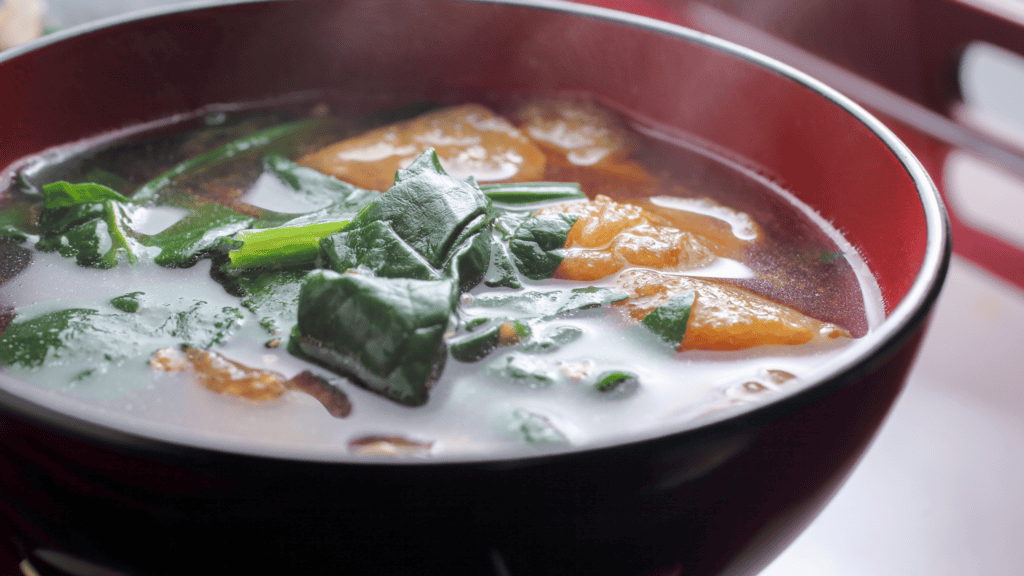
Dashi is a family of stocks with one shared job. It is the base of miso soup and noodle broth, the simmering liquid for vegetables, and it gets mixed into the batter of okonomiyaki (a savoury cabbage pancake) and takoyaki (battered octopus balls) before anything is cooked.
The standard one, awase dashi (blended dashi), is kombu and katsuobushi heated together in water and strained. Kombu is dried kelp. Katsuobushi is dried, smoked and fermented skipjack tuna. Between them they do something to food that is hard to describe and immediately obvious when it is missing.
The other versions you will meet:
- Kombu dashi, kelp alone, steeped in cold water or heated to just under a boil. Vegan.
- Shiitake dashi, dried shiitake steeped in water. Vegan.
- Niboshi dashi, made from small dried fish, usually Japanese anchovies, with the heads and guts pinched off first because they make it bitter. Not vegan, and fishier than katsuobushi dashi.
- Shojin dashi, the temple version, drawn from kombu and dried shiitake, sometimes with kanpyo (dried gourd strips), soybeans or adzuki beans. Vegan by definition.
Since the second half of the twentieth century, granulated and liquid instant dashi have largely replaced homemade stock in Japanese home kitchens. Instant dashi tends to taste stronger and blunter, and it is where a lot of the hidden fish now comes from.
What It Takes to Make Katsuobushi
Once you know what goes into it, it stops being surprising that it turns up everywhere.
The fish is skipjack tuna, sold in English as bonito flakes. It is beheaded, gutted and filleted, and the fillets are simmered just under boiling for 60 to 90 minutes. Then the bones come out and the smoking starts: five or six hours over oak, pasania or castanopsis wood, then a rest, then again, twelve to fifteen times over.
At that point it is already a finished product called arabushi (rough fillet), and it is what most supermarket bags of shaved flakes contain. The tar and surface fat get ground off, and then the part that sounds made up begins.
The fillets are coated with a mould, Aspergillus glaucus, and shut in a cultivation room for about two weeks. The mould ferments them and draws out the last of the moisture. It is scraped off, the fillets go back into the sun, and the cycle repeats. Twice through and it is karebushi (withered fillet). More than three times and it is honkarebushi, the top grade, and the Umami Information Center shows how it is made. The rarest is dried for over two years.
What comes out weighs less than a fifth of the raw fish and is hard enough that you shave it with a tool that is essentially a carpenter’s plane mounted over a box. Nobody goes to that trouble for a flavour they are willing to leave out.
Why the Vegan Version Works Just as Well
Kombu and shiitake dashi runs on the same chemistry as the fish version, and the scientists who worked that chemistry out were studying exactly these ingredients.
In 1908 Kikunae Ikeda, a chemistry professor at Tokyo Imperial University (now the University of Tokyo), worked out why kelp broth tasted the way it did. He identified glutamate, named the taste umami (roughly, savouriness), and patented a way to produce it. In 1913 his student Shintaro Kodama found a second umami compound, inosinate, in katsuobushi. In 1957 Akira Kuninaka found a third, guanylate, in shiitake.
Kuninaka found something else too. Glutamate and these compounds multiply each other. Put a glutamate source next to one of them and the result tastes far stronger than either alone. That synergy is why classic dashi pairs kelp with fish: kombu brings the glutamate and katsuobushi brings the inosinate.
Guanylate does the same job as inosinate. Kombu plus dried shiitake gives you the identical two-part boost with no fish anywhere near it, which is why temple cooks have never needed anything else. The numbers back it up: dried shiitake carries roughly fifteen times the glutamate of fresh, and kombu runs into thousands of milligrams per 100g where katsuobushi has very little.
At home, a strip of kombu and two or three dried shiitake left in cold water overnight gives you a stock with plenty of depth. Do not boil the kombu hard, because it turns bitter and slimy.
Where Dashi Hides
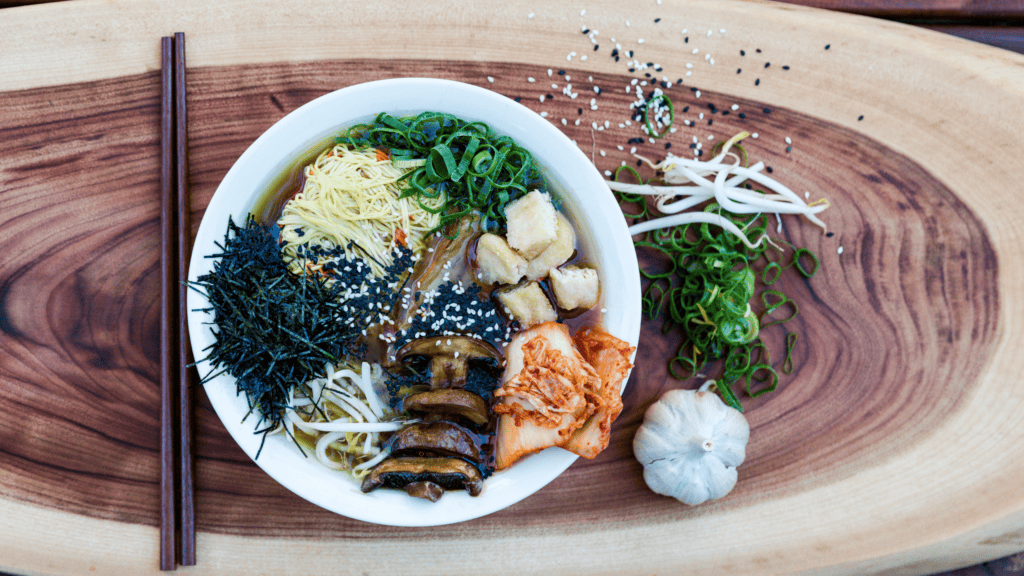
These are the dishes that look vegetable and are not. Dashi is simply the default seasoning, the way butter is the default in a French kitchen, so nobody thinks to mention it.
- Miso soup. The miso itself is fermented soybean paste, but the liquid it is dissolved into is usually awase dashi. Some shops make theirs with kombu alone, so ask before you order it.
- Nimono, the simmered vegetable dishes that fill half of a set meal. Pumpkin, daikon (white radish), taro and burdock, all simmered in dashi with soy sauce and mirin (sweet rice wine).
- Agedashi tofu. Fried tofu in a pale broth, and the broth is dashi.
- Chawanmushi, the savoury steamed egg custard. Dashi is the liquid it sets in.
- Mentsuyu, the concentrated noodle sauce. This catches more people out than anything else on the list, because it is the dipping sauce for cold soba (buckwheat noodles), the base of hot soba and udon (thick wheat noodle) broth, and a seasoning that gets splashed into everything.
- Ponzu, the citrus soy dipping sauce. Restaurant and traditional versions are often steeped with katsuobushi and kombu, though some big bottled brands contain no fish. It arrives unannounced next to gyoza (dumplings), hotpot and salads, so ask.
- Okonomiyaki and takoyaki batter, which is mixed with dashi before anything else goes in. The bonito flakes waving on top are the obvious part. The batter is the part people miss.
- Dashimaki tamago, the rolled omelette. The name says it.
- Curry udon, where the curry sauce is loosened with dashi instead of water.
Soba deserves a line of its own. The noodles are buckwheat and wheat flour, so they are fine, and everything you dip them in or pour over them is not.
How to Ask, and What to Say Instead
Asking whether something is vegetarian will usually get you a yes, because a bowl of vegetables simmered in fish stock is a vegetable dish by the local reckoning.
Ask about the stock directly. Dashi wa tsukatte imasu ka (だしは使っていますか) means “is dashi used in this?” It is a specific question about one ingredient, and it gets a specific answer.
Better still, ask for the version you want. Kombu dashi desu ka (昆布だしですか) asks whether the stock is kelp only. Shojin ryori (精進料理), Buddhist temple cuisine, is a term every Japanese cook knows, so saying it needs no further explanation.
Bejitarian (ベジタリアン) is widely understood, though it does not always rule out fish stock. Bigan (ヴィーガン), vegan, is increasingly recognised, especially in Tokyo, and is the safer word of the two.
The Version That Was Always There
Shojin ryori took its shape in the thirteenth century, when the monk Dōgen brought Sōtō Zen back from China and wrote Tenzo Kyōkun, his instructions for the monastery cook. Its stock, shojin dashi, has been a category of its own ever since. Kombu and dried shiitake are the backbone, sometimes with kanpyo, soybeans or adzuki beans added.
So when a Japanese chef makes you a vegan dashi, they are reaching for something with about eight hundred years of technique behind it, and a stock their own tradition already knows how to make well.
Buying and Cooking It Yourself
If you are staying somewhere with a kitchen, this is the cheapest good meal in Japan. Both ingredients are in every supermarket, they are inexpensive, and they keep for months in a cupboard.
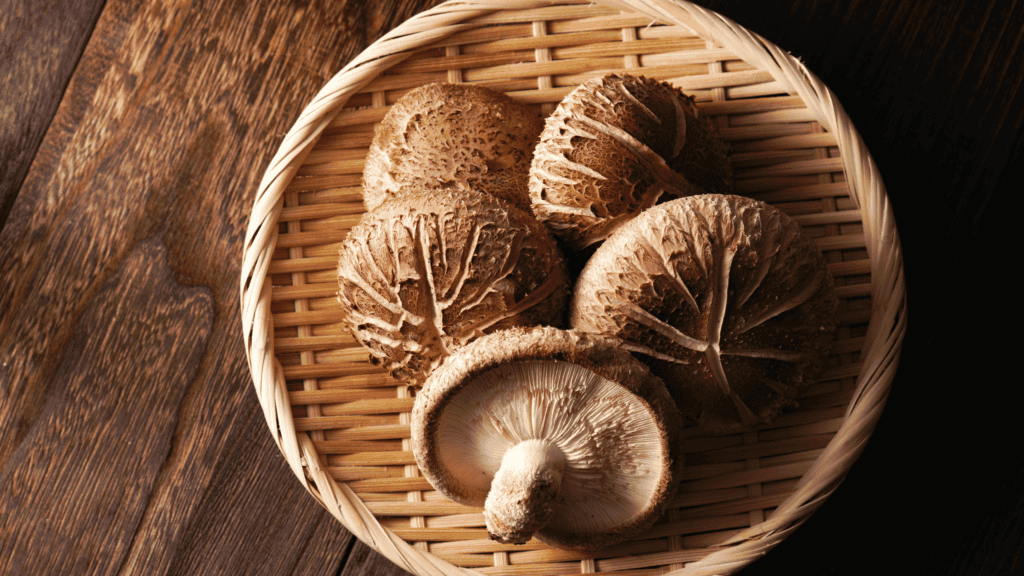
Kombu is sold in flat dried sheets, usually in the dried-goods aisle near the nori (pressed seaweed sheets). Dried shiitake, hoshi-shiitake (干し椎茸), sit nearby, whole or sliced, and whole caps give a cleaner stock. Most packets are labelled in Japanese only, so photograph the kanji before you go.
The method is nothing. Put a hand-sized piece of kombu and two or three dried shiitake in a litre of cold water and leave it in the fridge overnight. That is a finished stock. If you want it the same day, heat it slowly and pull the kombu out just before the water simmers, because boiled kombu turns bitter and slimy.
Japanese cooks get two stocks out of one batch. The first, ichiban dashi (first dashi), is the delicate one for clear soups. The same ingredients then go back into less water for a slower simmer, giving niban dashi (second dashi), which is less refined and goes into simmered dishes and miso soup. Kombu and shiitake take a second round the same way, and the Umami Information Center has the full breakdown of the traditional types.
The shiitake soaking water is part of the stock, so keep it. Squeeze the caps out into the bowl, slice them, and put them back into whatever you are cooking.
For instant dashi, read the ingredients panel and ignore the front of the packet. 鰹節 or かつお means katsuobushi, 煮干し means niboshi, 魚 or 魚介 means fish or seafood, and エキス after any of them means an extract. 昆布 on its own is kombu. Plenty of products are kombu only, but だし on the front tells you nothing either way.
The other way round the problem is to eat somewhere the question never comes up. Tokyo has a good run of fully vegan kitchens, and the vegan guide to Shinjuku and vegan guide to Shibuya cover the two wards with the most of them. Kyoto is where temple cuisine is easiest to eat as a full meal, and the rest of Japan and beyond is on the destinations page.
Frequently Asked Questions
Is dashi vegan?
Usually not. The standard Japanese stock, awase dashi, combines kombu kelp with katsuobushi, which is dried, smoked and fermented skipjack tuna. Kombu dashi and shiitake dashi are vegan, and so is shojin dashi, the Buddhist temple version, but you have to ask which one you are getting.
Is miso soup vegan in Japan?
Rarely by default. The miso paste itself is fermented soybeans, but the liquid it is dissolved into is normally awase dashi with fish in it. Some restaurants use kombu-only stock, so ask before you order it.
What is katsuobushi made from?
Skipjack tuna, sold in English as bonito flakes. The fish is simmered, smoked twelve to fifteen times, then repeatedly fermented with Aspergillus glaucus mould and dried until it is hard as wood and weighs under a fifth of the raw fish.
Is kombu dashi vegan?
Yes. Kombu dashi is kelp steeped in water and nothing else. It is the base that shojin ryori, Buddhist temple cuisine, and most vegan Japanese cooking is built on.
Does soba dipping sauce contain fish?
Almost always. The noodles are buckwheat and wheat flour and are fine, but mentsuyu, the sauce you dip them in or the broth you eat them in, is built on dashi with katsuobushi.
Is ponzu vegan?
It depends on who made it. Restaurant and traditional ponzu is often steeped with katsuobushi and kombu, while some big bottled brands list no fish at all. Ask in restaurants and read the label on bottles.
What is shojin dashi?
Shojin dashi (精進だし) is the fish-free stock used in Japanese Buddhist temple cuisine. Kombu and dried shiitake form the base, sometimes with kanpyo gourd strips, soybeans or adzuki beans. It goes back to the thirteenth century, when shojin ryori took its shape.
How do I ask if a dish contains dashi in Japanese?
Say dashi wa tsukatte imasu ka (だしは使っていますか), meaning “is dashi used in this?” Asking whether a dish is vegetarian usually gets a yes, because simmered vegetables in fish stock still count as a vegetable dish locally.
Is instant dashi vegan?
Most granulated and liquid instant dashi contains katsuobushi extract, and instant versions have largely replaced homemade stock in Japanese kitchens. Kombu-only instant dashi is sold in most supermarkets, so check the ingredients for 昆布 (kombu) without 鰹節 or かつお (katsuobushi).
Does vegan dashi taste as good?
It works by the same chemistry. Kombu supplies glutamate and dried shiitake supplies guanylate, and the two multiply each other exactly the way kombu and katsuobushi do. Dried shiitake carries around fifteen times the glutamate of fresh shiitake, which is why the dried ones are not optional.